
Purpose-Driven Careers in the Age of AI

As AI and automation rewrite the rules of work, many professionals are waking up to a sharp disconnect: They are working harder than ever, but for companies whose missions feel empty. They are asking themselves, "How do I start using my expertise to solve the problems I actually care about?"
In this episode, we explore the growing "impact technology revolution" that is creating an entirely new generation of careers focused on solving real-world challenges—from sustainability and health care to education, accessibility and social innovation.
We’re looking at how purpose-driven work is evolving, why human-centered skills matter, and how today’s learners and professionals can position themselves for careers that combine technology, impact and personal fulfillment.
To discuss this topic, we’re delighted to welcome Darlene Damm, author of Your Dream Job is Here: The Impact Technology Revolution and The New Jobs Saving the World.
Host
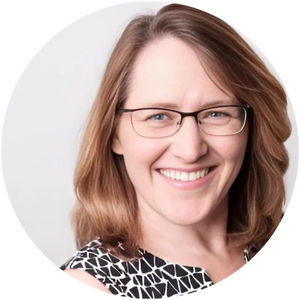
Jill Finlayson
Director of EDGE in Tech at UCGuest

Darlene Damm
Author, impact-driven visionaryDarlene Damm is an impact-driven visionary who co-founded two of the world’s first impact technology companies in aerospace and drone transport. She has taught and mentored thousands of founders and executives who went on to build impact technology companies across industries.
Darlene served in leadership and strategy roles with Singularity, Ashoka and the World Bank, and nonprofits in Vietnam and Myanmar. She has spoken about impact technology at the United Nations, the World Food Programme, SXSW, Google, Salesforce, Intuit, WalMart, Sony and Aramco and delivered TedX talks in Vilnius and Budapest.
Read the transcript from this interview
[MUSIC PLAYING]
Darlene Damm: The first thing that you can actually do is to just simply learn. So there's this problem that you're passionate about, go out and read about it. Go out and find out who else is working on it. Go out and reach out to the organizations and the people who are working on it and meet for coffee with them and learn. And you can do that while you're taking care of other responsibilities in your life or even working a different job to pay your bills.
[MUSIC PLAYING]
Jill Finlayson: Welcome to the Future of Work podcast with Berkeley Extension and EDGE in Tech at the University of California, focused on expanding diversity and gender equity in tech. EDGE in Tech is part of the innovation hub at CITRIS, the Center for IT Research in the Interest of Society, and the Banatao Institute. UC Berkeley Extension is the continuing education arm of the University of California at Berkeley.
As AI and automation rewrite the rules of work, many professionals are waking up to a sharp disconnect that they are working harder than ever but for companies whose missions feel empty. They are asking themselves, how do I start using my expertise to solve the problems I actually care about?
In this episode, we explore the growing impact technology revolution that is creating an entirely new generation of careers focused on solving real world challenges, from sustainability and healthcare to education, accessibility, and social innovation.
We're looking at how purpose-driven work is evolving, why human-centered skills matter, and how today's learners and professionals can position themselves for careers that combine technology, impact, and personal fulfillment.
To discuss this topic, we're delighted to welcome Darlene Damm, author of Your Dream Job is Here, The Impact Technology Revolution and the New Jobs Saving the World. Darlene is an impact-driven visionary who co-founded two of the world's first impact technology companies in aerospace and drone transport. She has taught and mentored thousands of founders and executives who went on to build more impact technology companies across industries.
Darlene served in the leadership and strategy roles at Singularity, Ashoka, the World Bank, nonprofits in Vietnam and Myanmar, and she has spoken about impact technology at the United Nations, the World Food Programme, South by Southwest, Google, Salesforce, Intuit, Walmart, Sony, Aramco, and has delivered Ted Talks in Vilnius and Budapest. Welcome, Darlene.
Darlene Damm: Thank you, Jill. It's so wonderful to be here.
Jill Finlayson: Well, I'd love to start by debunking a lot of those social impact myths that are keeping people from pursuing their dream jobs. Many people are stuck in these five limiting beliefs, and I'm hoping you can help us explain why they're no longer true. So the first one is this binary trap. You can either do good and be poor or do bad and be rich. Is that still true?
Darlene Damm: So this, I think, was true when I started my career, when I came right out of college. I started working in the nonprofit sector, doing work that I thought really mattered and helped a lot of people. And I soon found I would need a second job on the weekends or working at night to be able to save money or save money for a retirement account or pay for extra expenses because the salaries were too low at that time.
Jumping ahead around probably the 2010s, things started to change. And I see a lot of that actually is driven by technology. So new technologies emerged that people started to use to solve social problems, to build companies and startups, solving social and environmental problems. And these were also actually successful businesses. And so these new jobs emerged where you could have a normal salary, and you could be building something that was solving a problem.
And at the same time, you also started to see the nonprofit and for profit sector converge a bit. So nonprofits said, oh, we need business plans. We need to be able to make sure our employees have benefits. And then companies said, we're going to start doing corporate social responsibility. But over time, the two sectors have been merging together, and I think technology has been a driver of that.
Jill Finlayson: Let's talk about how they're merging together because another myth that's out there is that social impact is a charity. It's dependent on donations. Is that model still the only way to do good?
Darlene Damm: Yeah, yeah. So I think that has changed dramatically. In this book I use the term impact technology revolution, is because I think there actually is this massive change that is happening. But basically today, if you want to go work for a charity, you can do that, but you can also go work for a large corporation. You can work for a startup. You can work for a nonprofit using some of the most advanced technologies on the planet in your career.
And this also comes back to the question of, what is social impact? So is social impact working at a food bank or volunteering to work, helping the neighborhood kids, or is social impact building new technology for an electric boat or an electric car, which might be able to reduce pollution and help people? So we're seeing there's now a wide range of ways to contribute to the world, and that the way of doing that looks very, very different.
Jill Finlayson: That broadening of the term social impact, I think, is a really interesting and key part to this conversation, that there isn't one way to do good.
Darlene Damm: Yes, yes. I mean, at the end of the day, I think it comes back to each of us because one person can feel very strongly that social impact should involve some sort of sacrifice. And that's, I think, legitimate if that is what matters to you.
At the same time, that definition has limited the number of people who can make a career out of that. So someone else might say, social impact is working for a satellite company that is going to be able to help cities plan for floods. And they might have a high-paying job, and they might work at a startup that is giving them equity. So all of these definitions are changing right now.
Jill Finlayson: And we'll get into more where you can go do these jobs in a little bit, but I wanted to go back to something you just said, which was about technology changing the game. This flies in the face of another stereotype, which is that nonprofits are where technology goes to die, this idea that nonprofits are warm but inefficient, whereas companies are cold but super efficient. How are you seeing technology just rewriting those rules?
Darlene Damm: I think everyone's using technology right now, and you'll have some nonprofits that will not use technology, and you have others that are using very advanced technologies.
The World Food Programme, technically they're a humanitarian organization part of the UN, but they have a frontier technology division, and they have a whole program for startups using tech. And over the last 10 years, they've been using blockchain. They've been building autonomous vehicles that go through war zones. They have one of the most sophisticated logistics systems on our planet. So that's an example of an institution that says we have this massive problem that we have to solve, and we need the best technology to do it.
And then at the same time, if you look at the corporate side, yes, they are companies that are also using the best technology in the world to build amazing products and services. So I think it's kind of a myth to pigeonhole either sector because it happens across both.
Jill Finlayson: All right. I got one final myth I want you to debunk. And I think you can do this very well. There's a technical barrier. You can't lead a tech revolution or a tech company without a STEM degree.
Darlene Damm: Yes, I think that is also a big myth. I say that because I spent over 10 years working with startups. And it's been super interesting over the last 10 years to see people who you wouldn't think belonged in the tech startup world enter that world and use technology.
So I'm thinking about back in 2015, I met an actress who formed a company, one of the first edutainment companies that was based in Kenya, and she did this with other female actresses and producers from the US, Africa, London. But as an actress, she's not a technologist. But she figured out, well, I can work with technologists. I have the vision, and I have the ability to work with others to carry this out. Anyone from any field, I think, can build a tech company today.
Jill Finlayson: Well, I think you can speak from personal experience. I believe you were a history major, and yet you co-founded one of the very first drone companies. Tell us about your story.
Darlene Damm: Yes, yes. So I studied history in my undergraduate degree, and I worked for nonprofits in the US and in Southeast Asia, in Vietnam, Myanmar, mainly on education, cross-cultural projects, in the field work, running exchange programs.
Then in 2011, I realized technology was starting to play a role in the social sector. And in particular, it was people were starting to use tech to fundraise. So donate money via text message, that was a huge change for the nonprofit sector because there was this new way to fundraise.
At the same time, I always had a love for space since I was a kid. My grandfather worked on the Apollo mission, and I happened to live next door to the assistant of Dr. Robert Goddard and Esther Goddard, who invented the first rockets in the US. And so I heard these stories when I was like two or three years old. But then at the time, you had to choose also you go into social impact or you go into tech and engineering.
So in 2011, I saw there was an opportunity at a place called Singularity University which was running a program to help people understand how to use technology to solve massive social problems. I went to that program and during that summer co-founded a company called Matternet, which was the first company to create a commercial drone transport company. So this was back in 2011, and it inspired a whole industry to emerge.
So at that point I realized I can learn about technology. You work on a company for two years. It's very similar to getting a degree. And then after being with that company for a few years, I went back to Singularity to teach students, other participants how to use tech to solve social problems.
Jill Finlayson: So what was the social impact problem that you were trying to solve with drones?
Darlene Damm: We were seeing that in low-income parts of the world, there were a lot of places where people were walking eight hours a day to go to a medical clinic. They might need to do a blood test, or maybe somebody is in a remote location, or the road is simply washed out during bad weather and they need blood, or they need some medicine that's not there.
And so when we started that project, we were calling up people all over the world, from people that worked at large logistics companies to people that drove motorcycles as volunteers to get health supplies and just trying to find out, is there an opportunity to use these very tiny flying robots that at the time were only toys? There were toys, and people in Hollywood were starting to use them.
And then you also had these massive weapons that were dropping bombs, but there wasn't this in-between layer. So the inspiration for that actually came from a social problem.
Jill Finlayson: Yeah, it's absolutely extraordinary how you can take an idea and apply it in different challenge spaces or different issue areas. When you co-founded the company, what do you think you brought as somebody from more the humanities side to balance out what the CTO was bringing to the conversation?
Darlene Damm: I mean, for me, it's really important whatever you're building to have a clear problem you're trying to solve. And I had a background in international relations, international development, had lived around the world, seen problems firsthand.
Everyone at the time thought it was a terrible, crazy idea to the point where they almost were going to kick us out of the program. They thought it was such a bad idea. I reached out to the former Cambodian ambassador to the United States, and I asked him, what do you think of using drone?
We were still in the idea stage, and he thought that the drone existed. And there were these massive floods in Cambodia, and he wanted it that moment. And then he actually got mad at me when I told him that it was still an idea. And to me, that was like this moment of this is actually a really important company to build because someone is telling me that people are dying because it doesn't exist.
Jill Finlayson: I think you talked about the technology, like this is interesting. It could solve this very real problem. And then you found a customer who really needed it. What are some of the other technologies that we should be thinking about reapplying in the social sector space?
Darlene Damm: I mean, this is a super interesting question because with these new technologies, you look at them, and there's actually all these applications. Back in 2011, the industry did not exist at all. No one was building it. Should a drone carry medicine? Should a drone work on a farm? Should a drone help with floods? Should a drone-- and we realized there's actually 200 different ways this drone could be used.
And then you have to go through the process of, what is the best use case? Where is the market? And as you go through it, there's actually a lot of good choices. And then you have to think at the end of the day, well, what do I really want to do with this?
Jumping forward to today, there's a lot of new technologies that I've been following that I'm super interested in. So one is how we're using artificial intelligence and data to forecast and predict. So you'll hear in the news that we have these new forecasting companies, these gambling companies. There's a lot with sports forecasting, so prediction markets and the financial sector.
We have technology now that is helping us predict the future, and people are betting on it, but there's actually people in the social sector that are looking at, how do you use those same technologies to prevent a social problem or an environmental problem from happening? Because it's easier to prevent it than to solve it after it happens.
Jill Finlayson: So using prediction and data as a tool to not just solve a problem but to prevent the problem in the first place.
Darlene Damm: So there's a nonprofit in San Jose that is using data to predict who might become homeless, and then they intervene actually before that happens, because it's very expensive to help someone after the fact. The World Food Programme, they try to predict food shortages, famines before it happens and being able to intervene. So if you think about all the social problems in the world, which ones can we actually prevent using data, using AI?
Jill Finlayson: So what are some of the other, quote, "exponential technologies"? We're looking at sensors. Obviously, there's been a huge advance in AI. What are some of the other trends you're watching?
Darlene Damm: I personally become really fascinated by fusion. We have nuclear reactors that generate electricity and power using fission. We've been doing that for decades. But fusion is also a way to generate nuclear power, but it's much safer.
And in the last five, 10 years, advances in computing AI exponential technologies helped researchers control all of the different mirrors and lasers in a really sophisticated way to get to the point where the first fusion reaction at Lawrence Livermore generated more power coming out than it required putting in.
So now we have-- I think it's like 26 startups working on fusion technology. And this is super interesting because this is a technology that-- it'll probably be here in the 2030s, which isn't far from now.
And on the social impact side, it'll be a huge game changer, either helping people access affordable energy or it might disrupt renewable energies. It might disrupt fossil fuels. It might cause geopolitical problems. So we don't how it's going to unfold, but I think it's a really important technology to be tracking now. And if you care about social impact, why can't a social innovator create their own fusion company? Now's the time to do it if you're going to do that.
Jill Finlayson: Well, I'm glad to hear you talk about energy because one of the big concerns a lot of people have is if more and more people are using generative AI, large language models, we're going to have all these data centers that are going to be creating all this heat. They're going to be using all this water. So in your striving to do something good for social impact, you could actually be creating harm. So how do you see the role of social impact innovators to mitigate some of those harms?
Darlene Damm: I write about this in my book when I'm talking about jobs. So there's jobs that are building these technologies and solutions, where ideally, the builders will identify those harms in advance and do something about them so that they're not as harmful. But then on the other side, there's also a lot of interesting jobs right now in ethics, in regulation. We actually have jobs that exist to prevent those harms. So that's, I think, a super interesting career path, too, if you're interested in regulating that technology.
Jill Finlayson: Can you share some of the career paths of the innovators that you profile in your book? What can we learn from some of the people that you told their story?
Darlene Damm: There are people from all different backgrounds, from all over the world. There are startups that are using blockchain to create new types of loans in Nepal. There's a startup in Kenya that's building an atmospheric water harvester to pull water out of the air to provide clean water to villages, schools, companies.
There are innovators working in the Amazon who are trying to figure out, how does artificial intelligence interact with Indigenous knowledge? There's startups working here in Oakland building electric boats that don't pollute. Even groups like NVIDIA, they're building a giant digital twin of the planet that looks at climate to be able to look at things like water, food supply.
So I think what I was trying to convey in the book is no matter what country you're from, what your background is, what you're trained in, there's a job for you in this impact technology revolution.
Jill Finlayson: And there's not one type of person that can do this.
Darlene Damm: Exactly. One of the things that the World Food Programme shared is that they had a partnership with Google around accounting. So if you think about an accountant, you don't immediately think social impact.
But what if you're the World Food Programme and you're going into hundreds of locations, there's an earthquake, there's a war, and everyone's using a different accounting system and a different language, maybe one's paper, one is like a software? How do you close your books? They build an AI system to help reduce the amount of time to close their books. I think it was from several years down to one year.
There's a rule, if you're an accountant, if you're a lawyer, if you're an energy expert, if you're an impact expert, there's a lot of jobs out there doing good.
Jill Finlayson: Let's talk about a couple of the people. So you mentioned Hla Hla Win and she was doing EdTech. Tell us a little bit about her story.
Darlene Damm: Yes, yes. So when I was in grad school, back in my 20s, I spent some time in Myanmar working at a school, and I met a woman named Hla Hla Win. And she grew up in Myanmar and was training to be a teacher and was very interested in how could she help her country go from a rope based education system into a 21st century learning paradigm, where the education is much more interactive, the kids are learning to come up with their own ideas versus just memorization?
And she then went on to-- found what I believe is the first EdTech company in Myanmar as well as maybe one of the first or second startups in the entire country. So she realized that there were these really amazing technologies coming out around 2015, 2016, augmented reality that made learning fun if you had a device.
And so she launched that startup in Myanmar, and it was super successful. Thousands of kids, teachers, parents, all wanted to learn from her technology. And she also built a successful company. She had to really build from the ground up. She had to teach business leaders how to become startup investors. She had to travel hundreds of miles to find the one person who had the technical talent to help her. So she really just had to not only just build this startup or product but launch an industry in her country to help solve this education problem.
She was also-- she is a mother of a young child, and she's also shared that she's dyslexic. And she dropped out of school several times while she was growing up. So she was very committed to helping fix the education system in her country.
Jill Finlayson: So both having the experience as a teacher but the passion to change the system really?
Darlene Damm: Yes, yes. And to do whatever it would take to change that. And then that passion got tested, of course, because a civil war broke out in the country. And this was really an incredibly challenging time. Not only was the government like shutting down the banks so she couldn't pay her staff or turning off the electricity and internet, but there were literally-- there was violence in the street right outside her home.
And she eventually was actually put on a wanted list because she was in a powerful position in the country. And at one point thought her entire EdTech company, which I think had 60 staff working for it, serving tens of thousands of kids, she thought the war was going to destroy it.
And then she was on this wanted list. And so she went into hiding in the jungle, in a temple. And while she was there, she was devastated, but she saw in this place where she was hiding that kids were using her technology to keep learning during the middle of this war. And she realized at that point she had built a solution. Even with this ongoing war, the kids were still learning. And so she solved this problem. The kids could still learn.
Eventually, she had to flee the country, rebuild the startup outside and inside the country, but is now serving a million kids remotely.
Jill Finlayson: Impressive. So some things we can take away from her experience was this persistence, but also she kind of made her solution portable, and she was able to take it to new audiences as well.
Darlene Damm: I don't think someone who hadn't grown up in a country at war could have developed that solution. It was her experience of living through that that she knew this could happen again. We have to make sure that this technology works offline.
So again, going back to innovation, you have a startup, and there's a different role. There's the person who understands the problem and the solution. There's people that can build it, there's people who fund it, but it's all a team. And everyone's knowledge and their expertise and their resources, they're all valuable.
Jill Finlayson: What are some of the other best practices that you've seen successful social impact innovators do?
Darlene Damm: I think it's super important if you're working on a new technology or a new solution to really think about the people that you're helping, they're part of your team. They're part of your extended team. They also have ownership. They have a point of view. They can help you develop this technology and the solution.
And the innovators, I think, who really do that, they succeed both-- they're getting the input needed to make a good product to make a good solution, but they're also, in a way, they're developing their partnerships, their customers, all that process from day one, day zero, actually.
Jill Finlayson: So really the entrepreneur best practice of co-creation, cooperative ownership, getting everybody to build the solution. So it really works for their context.
Darlene Damm: I worked for a while at a nonprofit called Ashoka. They initially supported social entrepreneurs as their mission, and then they transitioned to something called helping create changemakers, building an Everyone a Changemaker world because they realized that the social entrepreneurs that they had been supporting for decades that really solved the problem, they recruited people to also come be innovators, to also lead that, become a change maker themselves.
So elevating and lifting other people up and helping them solve the problem with you is the most important ingredient to solving an actual problem.
Jill Finlayson: I think another thing that I took away from these success stories is using technology as this force multiplier, that you don't have to get just a little incremental improvement. You should go for something much bigger.
Darlene Damm: I spoke a little bit about NVIDIA and Earth-2. So it's something called a digital twin that is being built. It's like a replica of our Earth. But you can also build a digital twin of a building or of your heart. Digital twins can be used everywhere, but one of the things they do is they give people insight into a system.
So you can see if I change this one piece of the problem, how will it impact all the other pieces? If I fund this one initiative, how will it change the entire system? So as we get more data, as AI gives us more ability to work with that data, we can approach solving social problems in a very sophisticated way and at scale in a way that we couldn't actually see or operate at that level five or 10 years ago.
Jill Finlayson: It allows you to play out different scenarios before actually investing a lot of resources to do something. I love that aspect.
We've convinced people that there is a path forward. You can get into impact, but really, the first question starts with, what problem should you work on? How do you help people identify where to turn to if they want to have social impact?
Darlene Damm: One way is what problem have you struggled with, or what problem has your family members or your community or your country struggled with? Because having that firsthand knowledge of a problem, it's priceless. You're an expert. You're a PhD in the problem, and you didn't even have to go to school for it.
So one is asking yourself what problems matter to you, or maybe, is there something you just care a lot about? I care a lot about nature. It's just something that awakens me, and I feel passionate about.
Jill Finlayson: So instead of, what do I want to do, it's more like, what am I worried about, or what problem do I want to solve?
Darlene Damm: Yeah. What keeps me up at night?
Jill Finlayson: Say you've identified that interesting intersection between your skills and what the world needs, that ikigai model, what would be the path forward? Let's take a scenario. If you wanted to be a founder, what would be your first steps?
Darlene Damm: This is something that I write about in my book because I think it's often left out of the career conversation. But I think there's an important step to asking yourself, how much risk can I take in my life right now?
So if you are barely getting by, maybe financially you're struggling, maybe you have some other-- there's a health problem or there's a family problem in your life, I think it's important to take that into account because there's this myth in the startup world of you have to risk everything. Go out there, start your startup, put it all on your credit card. That's what people do. It's the only way.
And I was like, actually, that's not what I've seen. I can't tell you how many founders I know who had second jobs or who have someone else who's providing their income for them. I think that's actually a pretty destructive myth that's out there.
And so the way that I try to approach it is think about how much risk you can take in your life and where you are. So if you're in a place where you actually can take a lot of risk, you can jump in and start a company. You can go on LegalZoom and incorporate it in a couple days. But if you're at a place where it feels like too much to carry that, then you can actually create a plan to get in there.
I have three different approaches for taking that. The first thing that you can actually do is to just simply learn. So there's this problem that you're passionate about, go out and read about it. Go out and find out who else is working on it. Go out and reach out to the organizations and the people who are working on it and meet for coffee with them and learn. And you can do that while you're taking care of other responsibilities in your life or even working a different job to pay your bills.
The second piece is experimenting and engage. Maybe there's a way that your existing job, you have skills that you can help solve a problem that an existing organization is using. You can become an advisor to a startup, or you could be a volunteer for a weekend, or you could come up with a project or a collaboration between your two companies or organizations.
And then the third is, what if you actually do want to start your own startup? There's a lot of resources now for people who want to do that, incubators, accelerators, educational programs, where if you join one of those programs, you'll have a group of people that walk you through what is the process? Like you need to create a business plan, a pitch deck. You need to go out and fundraise. You need to build a team. So there's actually institutions that can help you do that.
Jill Finlayson: So if that is too much risk for me, if I'm like, I can't take that jump right now? You talked earlier about the accountant. What if you just want to help a founder, you want to be founder adjacent?
Darlene Damm: Imagine, if you're an accountant and there's a nonprofit or a startup that's working about a problem you're passionate about, reach out to them and say, hey, I'd love to help you with this. I'm passionate about this topic. Can we meet up, and let me see how I can help you. So I think more and more, it's those initial conversations, that collaborating that builds trust that then leads to a more full-time role, either independently or with that organization.
Jill Finlayson: So like you, rather than bringing the technology skills, you're bringing your expertise and applying it to a company that's doing something you care about?
Darlene Damm: Yes, yes, exactly.
Jill Finlayson: What about the people who are technologists? And a lot of them are working for companies that maybe they're a little disillusioned with nowadays. How might they take their technology to new places?
Darlene Damm: Technologists are in high demand by the social impact sector. And it's really that many technologists just don't know that these jobs or careers exist.
So I think about the Ocean Cleanup, they're using a lot of technology to track plastics in the ocean and then go out and clean it up, sometimes with different types of robotic or automated systems. They need technologists.
The World Food Programme, they have a frontier technology division. They need people who understand how blockchain works. There's all of these different jobs that are emerging in the social impact sector, where yes, they are hiring technologists today.
Jill Finlayson: What if you are working at a company and you don't want to leave your job but you want to see the company be more green or more sustainable? What's the entrepreneur route?
Darlene Damm: Depending what the company is, there's a super exciting opportunity to propose new innovations, to propose new products. So I think about drones and the air mobility industry.
So I worked with small drones, but there are several companies right now that are building these big electric vehicles that are giant drones that carry people. Those companies exist. It's still the beginning of the industry, but if you think about, well, five years from now when there are a lot of those vehicles, we're going to have to change how architecture works. We're going to have to redesign buildings. We might redesign cities to accommodate these new vehicles.
So say you're an architect or say you work in real estate, there's an opportunity right now to propose, let's open up a new division to think about how our industry is going to interact with these future flying vehicles. How do we redesign airports? So looking ahead at the technology if you're an existing company can tell you this is how we need to change. This is how we need to launch something new.
And by the way, these vehicles are electric, so they're also green. So there's a social impact piece.
Jill Finlayson: Governments are also very anxious to get technology people to come in. We also have the opportunity to apply your technology skills to help improve education, because education has to reinvent because of all the AI shifts and changes. How do we change our pedagogy to match so you're not really limited?
Darlene Damm: There's no limits right now. All these different technologies are being brought into every single career, every single job.
Jill Finlayson: So what are some of the questions you might ask yourself? Like, what is a big inefficiency in this problem that technology hasn't been used to serve, or what are some questions that people could ask themselves that would help them discover areas they could apply their skills for social impact?
Darlene Damm: Social problems are really interesting because we accept them. With the work with the drones, the assumption of most of the world was, yes, people have to walk eight hours per day to get to a clinic and someday their government, maybe 30 years later, is going to build a road, and that's going to cost billions of dollars. And that was the mindset of the world. And what we said was, well, these comparatively super cheap flying robots exist. Would it actually be cheaper to build an aerial highway than to put in a real road?
I think social problems are interesting to look at because everyone assumes they are the way they are. The bias is embedded into social problems, is like a place to find innovation.
And I'm thinking about Muhammad Yunus, who invented the field of microfinance because he said poor rural women are actually really good with money. They will repay a loan. The rest of the world just assumed they did not have the ability to repay a loan. That social problem existed because of a bias. And because this microfinance industry, it's now massive. That came from overcoming a stereotype in our head.
I saw recently-- it was a post on LinkedIn. There's a startup that is trying to help families better deal with the problem of anorexia. And I thought, that's interesting. It's a new problem. And we have different ways to deal with it, but it's still a problem for a lot of people. But someone said, I actually think we can do better.
So looking at social problems that we just assume are there and are hard and are impossible to solve, and maybe we'll be lucky if we solve it a little bit, those are actually great places to look at. How can we do things better?
Jill Finlayson: So if we find those spots, those sweet spots, that intersection, what are some of the key takeaways you hope people take from this conversation that will help them transition from just thinking about this to moving in that direction and aligning really their work and what they spend so much of their day on with their values, with the impact they want to achieve?
Darlene Damm: Caring about a social problem and having knowledge of that problem, even experience that problem yourself, it's a tremendous resource. It's very valuable. Other people don't have that knowledge. So use that to help solve that problem. Turn that around.
I think the second piece is, yes, there are some skills you need to work with certain types of technologies, but you can learn a lot. And you just got to go in there and start learning about it and trying it. I found as adults, I learned about new technologies not from a formal education program but by talking to my peers, by actually asking someone also, how does this work? Going to events, learning.
And then I think the other piece is I would love to see a world where when you think about very powerful technologies that are on the planet, that are impacting billions of people's lives, that are maybe causing a lot of problems, I think people who care about social impact need to say, I'm going to found the next company. I'm going to be the one who's in charge, and I'm going to be doing it in a different way based on how I know how to help people, not just make money off this problem. Because no one is in charge of who becomes the founder of these companies.
Yes, there are investors, yes, there are programs that let you in or out, but it also comes back to us. And we have to say, I'm going to take responsibility for this problem. Why not me?
Jill Finlayson: I really like the drive toward initiative. If you're going to wait for someone else to do it, they may not do it, but you can actually lead.
I think another couple of things I took away from your conversation was that you don't need to necessarily learn a new skill. You can apply your old skills or your expertise to a new problem, and you can also be learning new technologies. It's a crash course when you work at one of these startups or you work at an NGO.
Darlene Damm: Yes, yes. And you can do it with other people. You don't have to be the expert in everything. Other people are the experts in their thing, and you work together.
Jill Finlayson: Yeah. So the last thing I'd love to get your thoughts on as we close out is, how do you do this in a way that's responsible and ethical? Because if you want to have social impact, you don't want to have social harm.
Darlene Damm: So one is to actually sit down and think through, if I create this, how might this technology be misused, either maybe intentionally or accidentally? So you can sit down, and you can write all this stuff down, and you can say, well, what can I do about that? So that's just-- it's a very simple thing to do, is to actually think through the consequences.
The second part is to include a lot of different people from different backgrounds and different experiences in those conversations in the work itself, because even if you don't catch something, they might catch something that they can alert you about.
And then at got level, too, I think a lot of it is just about empathy, thinking if I build this and something happens to somebody, would I want that to happen to me? Would I want that to happen to my kids, to my brother, my sister, my parents?
So there's programs out there that can help you think through these things. There's ethics programs, regulatory programs, all of that, but I think also it's like you've got to be the one who's leading that work.
Jill Finlayson: So a full circle why the humanities still matter in an AI advancing world?
Darlene Damm: Yes, yes, yes, yes, absolutely. I think I used to think that AI and the way AI treats me, it will have a-- it will determine my humanity. If I'm in this AI world, I'm going to lose my humanity. And then I realized, it might change my job, it might change my economy, but my humanity is based not on how someone treats me. It's always based on how I treat other people. And that was a light bulb for me. How we treat others is where our humanity comes from. It's not how the world treats us.
Jill Finlayson: So is that what makes you optimistic that our listeners will go out and make some social impact change?
Darlene Damm: I hope so. I mean, it's a self-fulfilling prophecy, right? If we want to live in a world where people are making the world a better place, we need people to go out and do it. If they don't do it, it won't happen.
Jill Finlayson: Well, thank you for giving them a little bit of a guidebook and a look into others who have done this and really giving them the challenge to go out and do this themselves.
Darlene Damm: Yes, yes. If you don't do it, someone else is going to do it, and they're going to do it their way. So it's up to all of us.
Jill Finlayson: And with that, I hope you enjoyed this latest in a long series of podcasts that we'll be sending your way every month. Please share with friends and colleagues who may be interested in taking this Future of Work journey with us and make sure to check out to extension.berkeley.edu find a variety of courses and certificates to help you thrive in this new working landscape. And to see what's coming up next at EDGE in Tech, go ahead and visit edge.berkeley.edu.
Thanks so much for listening, and I'll be back next month to continue our Future of Work journey. The Future of Work podcast is hosted by Jill Finlayson, produced by Sarah Benzuly, and edited by Matt DiPietro.
[MUSIC PLAYING]